Steffen Spiele games for exploring choices on a wooden board
As one piece advances, the position shifts and the possibilities on the table transform. Steffen Spiele games invite you to examine the shapes and decisions up close. Explore the Helvetiq catalogue, then choose a title that fits the rules, the players, and the joy you find in watching a situation unfold. The wood and appearance may spark your initial interest, but the way of playing gives each title its unique character.
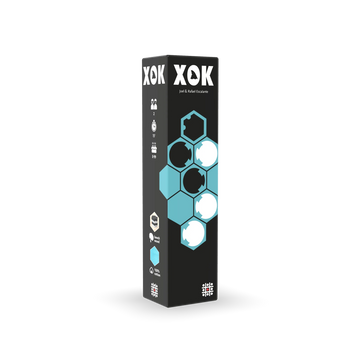
Founded by Steffen Mühlhäuser, Steffen Spiele joined Helvetiq in 2023. The collection includes Linja, Nonaga, Passo, Alto, Coloro, Mabula, Stakko, Ringo, Six, XOK, and Kulami. These names open up several paths to explore, one product at a time. Look at the materials and objectives to understand what distinguishes each experience. One collection can share a love of shapes while offering different actions, durations, and audiences.
Passo: a two-player game in an evolving space
The “Passo” game, created by Clemente Musa and Steffen Mühlhäuser, is designed for players aged 7 and above. The game lasts for 15 minutes. Players move a disc, and then remove the tile that they have just moved. As a result, the board gets smaller over time. The objectives of the game are to move the disc to the farthest position on the opposite side, or to remain as the last player who can still move. This gameplay mechanism serves as a good example of how space can be utilized in a strategic manner.
To present this type of rule, it’s necessary to show the connection between an action and the consequences that it leaves behind. The movement doesn’t only refer to the place where one arrives. The situation changes also after the tile is removed. Players can then consider the remaining possibilities, as well as those that seem unlikely to happen. A demonstration can help make this relationship clear before trying more complex strategies.
Passo offers, in particular, ten wooden discs and tiles for use in the game. To choose the right product, please refer to the content and information provided in the description of the product. The rules that are provided in the downloadable file are indicated in French, English, German, and Italian on the product’s page. These features are specific to this particular product. For other games by Steffen Spiele, please check the specifications of each product, rather than assuming that the configuration or languages used are the same.
How to choose a Steffen Spiele game
Watch what you do on your turn
The best way to start is often through the actions that are required. Do we move a piece around, organise a space, or make another decision that’s already outlined in the rules? This question allows us to compare the titles with concrete examples. A game may seem familiar in its form, but it can still have a different way of functioning. Take the time to read the objectives and the rules of the game, so that you can choose an experience that you’d really like to share with your partner or group.
If you enjoy abstract games, take a look at how the situation is presented, and how important the choices made by the opponent are in your decisions. Some people prefer to compare the possible moves before taking action. Others prefer to start quickly and explore over several rounds. The rules and the way the game is presented will help you identify the option that suits your preferences, without neglecting the difficulty that comes with the appearance of the equipment itself.
Choose for two players or another configuration
The number of players should match your primary usage scenario. For two-player games, look for references related to this configuration. Compare their objectives. If you want to play with family members or more people, check the details provided in the description of the game. A two-player game and a group activity require different types of interactions. Therefore, the configuration is an important factor to consider before making a choice based on the theme or format of the game.
Wooden pieces and reading the position
In a game of placement or movement, the materials provide a visual representation of the choices that can be made. You can observe the distances between elements, the relationships between them, and the consequences of each action. The colours and shapes serve to help you understand the situation according to the rules of the game. Before starting a game, take some time to understand the roles of each object involved in the game. This understanding connects the object that we’re manipulating with the functioning that we’re trying to comprehend.
Tact and aesthetics play a role in the pleasure of choosing a wooden toy. However, they are also accompanied by certain rules. Don’t underestimate the age of the audience or the complexity of the structure of the toy. Consider the information provided in the manual, as well as what participants need to do. In this way, you can combine a desire for play with the practical aspects of the toy, so that it’s suitable for people who want to enjoy playing with it.
Strategy and tactics: explore without planning everything
The strategy can begin with a general intention, while a tactical decision is based on a specific situation. When you discover a game, it’s not necessary to have a complete method in mind. Instead, consider the possibilities and constraints, and then try out one idea within the rules of the game. The first steps help you understand what’s relevant to you: anticipate how the game will develop, observe how a position changes after certain actions are taken, and understand how a position changes over time.
After the session, you can return to a moment that caught your attention. Did a certain movement or action open up unexpected possibilities? Did one option seem interesting before it changed direction? These exchanges help to deepen your connection with your partner. They don’t require everyone to explore the same level of depth in their thinking. Some people will appreciate the forms and rhythm of the experience, while others will enjoy the opportunity to compare different options during the session.
Discover the rules and set the table
A clear objective before the details
Begin by explaining what the players are trying to achieve, and how the game ends. Then, demonstrate an action using the necessary equipment. This progression provides a clear outline for further explanations. If the game offers multiple modes or special features, take a look at how the rules describe these features before starting the game. The clarity of the first discovery comes from an explanation related to the actions that the participants will actually perform.
Install the game on a surface where all the necessary information is easily visible to everyone. Keep the rules nearby, and take the time to understand the rules if necessary. The first part of the game may have a different pace compared to the subsequent parts. You can then choose to play it again, using the rules that are already familiar to you. The joy of playing a board game also lies in this shared progression, from understanding the rules to developing your own ideas for the game.
For the family or as a gift
When children are involved, their recommended age and the activities they can participate in need to be taken into consideration. The age range for Passo is 7 years old. This doesn’t automatically apply to other options. For adults, consider their play habits and the amount of time they have available. The gift can be based on a preference for wood-based activities, games that involve two people, or other considerations. It can also be determined by the characteristics of the box you’re considering.
Compare the price in Swiss francs on the Swiss store’s website, as well as the described content and dimensions of the product. If you are looking for a particular type of manufacturing process or materials, please refer to the details provided in the product description. The name of a product series and its appearance do not necessarily indicate all the stages involved in the production process. This information helps you make a more informed decision when choosing a product, based on the criteria that matter to you.
A collection to browse according to your wishes
You can start with a title that catches your eye visually. Then, you can explore other options, where the rules of the game arouse your curiosity. Linja, Nonaga, Ringo, Six, and other references from the catalogue each have their own identity. Look at the descriptions to see what they actually offer. In this way, a collection can be built around a desire for play, a preference for certain forms, or a desire to explore different ways of making decisions.
Compare how the pieces move in Steffen Spiele
For your first Steffen Spiele game, look at what a turn asks you to do. With Passo, imagine how the position changes when a piece moves. For other wooden strategy games, compare which pieces are shared, how the board is set up and the choices that lead to the goal. If you’re choosing for two people, check the player count and give yourselves time to play through a few turns as you learn the rules.